
PME FRANÇAISES DE 50 À 500 · AU PROJET
Le travail qu'on n'ose pas confier à une machine : l'IA là où elle rapporte, votre expertise là où elle l'emporte.
Vous saurez quels dossiers peuvent partir sans relecture, et lesquels demandent encore quelqu'un. Le logiciel traite ce qui est sûr et signale le reste.
Vingt minutes, gratuites. Vous saurez si c'est faisable chez vous.
Ce que ça change chez vous
Vos dossiers sortent plus vite, et tous solides.
Là où tout est relu, plus aucun dossier n'attend pour rien. Avant de signer, un client regarde le prix et le délai ; la qualité, il la découvre après.
Ce que savent vos meilleurs sert toute la maison.
Leur façon de faire est écrite pour la première fois. Le dernier arrivé s'en sert comme l'ancien, et un concurrent ne peut pas la copier.
Vous gardez la main.
Ce qui revient à vos équipes est écrit d'avance. Vous voyez ce que le logiciel a décidé seul, rien n'y change sans vous, et il tourne chez vous.
Comment c'est possible
Quand donner les clés à l'IA ? Quand la question est un constat : n'importe qui trouverait la même réponse en regardant le dossier. « Le client a-t-il fourni les cinq pièces demandées ? » Un programme le vérifie, son taux d'erreur est mesuré sur vos dossiers, et ce dossier-là part sans relecture.
Quand refuser l'IA ? Quand un simple calcul suffit. Et quand la question demande un jugement : « Ce prix est-il défendable sur cette affaire-là ? » Quelqu'un en répond, et aucun modèle, si bon soit-il, ne le reprend.
Quand reprendre les clés ? Quand l'IA change de version. Elle se mesure à nouveau sur vos dossiers avant de bouger, et si elle recule, la question revient à vos équipes.
Qui décide ? Vous. Ce qui revient à vos équipes est écrit d'avance, pas laissé à l'appréciation du logiciel, et c'est vous qui validez chaque changement.
Vos dossiers restent chez vous ou sur une infrastructure souveraine, et rien de confidentiel n'en sort sans votre accord. Le logiciel est conçu pour les exigences du règlement européen sur l'IA (AI Act).
Dans votre maison, trois questions reviennent chaque semaine, et elles vont rarement à la même personne.
- « Pourquoi cette affaire a été chiffrée comme ça ? » — celle qui monte les offres.
- « Ce dossier, on le traite comment ? » — celui qui connaît l'exploitation.
- « Peut-on promettre ça à ce client ? » — celui qui connaît le client.
Le dossier attend donc à trois endroits différents. Nous reprenons le travail avec ces trois personnes.
Pour chaque tâche, nous prenons la méthode la moins chère qui tient. C'est l'IA quand il le faut, et un simple calcul quand il suffit.
Les étapes, et ce que chacune vous laisse
Un seul travail, pas un état des lieux de toute la maison. Une seule signature, et vous choisissez où vous arrêter.
- Par où commencer — gratuit, réponse sous 48 heuresPar écrit : le travail par lequel commencer, ce qu'il vous coûte aujourd'hui avec vos chiffres, et ceux qui ne s'y prêtent pas.
En détail
Le bon premier travail revient souvent, dépend de quelques personnes, et une partie de ses questions relève du constat. Il y a deux façons de le trouver, au choix.
Par écrit, sans appelVous décrivez en cinq minutes ce qui revient chez vous. Nous répondons sous 48 heures ouvrées.
Décrire ce qui revient chez moi →De vive voix, en vingt minutesLe même choix, et nous vérifions en plus qui peut dire oui et où sont vos dossiers passés.
Parlons de vous → - Les trois dossiers de référence — six semaines, 4 500 € HT, déduits du logiciel si vous continuezTrois de vos vingt derniers dossiers, repris avec ceux qui savent, une demi-journée par semaine. Vous repartez avec vos trois dossiers annotés, trois chiffres, et le plan.
En détail
Nous commençons par quelques entretiens avec tous ceux par qui le dossier passe, de celle qui le monte à celui qui le facture, pour confirmer que c'est le bon travail. Vous nous donnez ensuite la liste de vos vingt dernières affaires sorties, les vingt dernières et pas les plus belles, en disant pour chacune si elle était bonne ou moins bonne. Nous en choisissons trois ensemble : une ordinaire, une que vous ne renverriez plus, et un cas limite. Nous les reprenons en détail avec ceux qui savent, une demi-journée par semaine pendant six semaines au plus.
Ce que vous recevez, et qui vous reste si vous vous arrêtez là
- Vos trois dossiers annotés. Question par question, ce qui rendait le dossier bon, ce que vous ne renverriez plus, et pourquoi. C'est la première fois que votre maison écrit ce qu'elle appelle un travail juste.
- Trois chiffres que vous n'avez pas aujourd'hui. Combien de jours un dossier met à sortir, quelle part de ce temps il passe à attendre quelqu'un, et à quel point il change selon qui l'a monté. Ils sont pris sur vos archives, pas sur le temps de vos équipes.
- Le plan du projet. Pour chaque question d'un dossier, il dit qui la prend. Les constats vont au logiciel, avec la méthode la moins chère qui tient : l'IA quand il le faut, un simple calcul quand il suffit. Les jugements restent à vos équipes. Il dit aussi dans quel ordre construire.
Ces trois dossiers mènent au plan. Le plan prépare le cahier des charges, que vous le fassiez réaliser par nous, par un autre prestataire ou en interne.
Cette étape ne dit pas encore combien de dossiers le logiciel traitera seul. C'est la première chose que mesure l'étape suivante, sur les dix-sept autres dossiers de votre liste.
Vous pouvez vous arrêter là, sans pénalité et sans rien nous devoir de plus.
Un exemple sur six semaines, chez un fabricant à la commande →
- Le logiciel en place — au projet, chiffré à la fin des trois dossiersChez vous ou sur une infrastructure souveraine. Aucun dossier ne part sans que chaque constat ait été vérifié, le dixième comme le premier. Le logiciel dit lesquels demandent encore un jugement.
En détail
Avant de construire, nous appliquons le plan aux dix-sept autres dossiers de votre liste : vous voyez combien le logiciel en traiterait seul, et ce qu'il raterait, avant de payer. Quand il ne sait pas, il ne devine pas : il s'arrête et passe la main. Il garde la trace de tout ce qu'il a décidé seul. Il s'installe là où le dossier circule déjà, avec ceux qui tiennent vos outils. Vous en avez les clés : il évolue sans nous, et vous avez de quoi l'étendre à un deuxième travail.
Vous voulez voir ce que ça donne sur un vrai dossier ? Lisez L'IA pour répondre à un appel d'offres : mémoire technique, DPGF, DC1 et DC2. Vous y verrez ce qu'elle rédige, où elle se trompe, et pourquoi.
- Le suivi — inclusUn registre : ce que le logiciel a traité seul, ce qu'il a renvoyé à vos équipes, son taux d'erreur, et ce que chaque changement a donné.
En détail
Les trois chiffres du départ sont mesurés à nouveau. Le taux d'erreur est vérifié sur un échantillon de dossiers tiré au hasard : vous contrôlez un chiffre, pas chaque dossier. Chaque version de la règle est gardée, et chaque dossier porte la version qui l'a traité : vous voyez ce qu'un changement a donné, et où la règle doit bouger. Le registre vous appartient et s'exporte.
- Une fois en place — le logiciel continue d'apprendreChaque dossier que vos équipes tranchent précise la ligne, et c'est vous qui validez chaque changement. Quand l'IA change de version, elle se mesure à nouveau sur vos dossiers avant de bouger.
En détail
Des cas que personne n'avait prévus arrivent toujours. Le registre dit où la règle doit bouger. Une nouvelle version, de la règle ou du modèle, est d'abord rejouée sur les dossiers déjà vérifiés : vous voyez ce qu'elle change avant de dire oui. Rien ne change dans le logiciel sans vous, et chaque changement se mesure comme le premier. Nous revenons quand vous nous appelez.
Un exemple sur six semaines, construit pour l'illustration
Un fabricant à la commande de cent vingt personnes répond à des appels d'offres. La réponse passe par celle qui monte le dossier, le bureau d'études, celui qui chiffre, et le dirigeant qui signe. Elle met trois ou quatre jours à sortir, et il arrive qu'un poste soit oublié dans le chiffrage. Les deux qui savent relisent tout, parce que rien ne dit quelles réponses auraient pu partir sans eux.
Semaine 1. Entretiens avec chacun par qui le dossier passe. Le dirigeant donne la liste de ses vingt dernières réponses, les dernières et pas les plus belles, en disant pour chacune si elle était bonne ou moins bonne. Nous en choisissons trois ensemble : une ordinaire, une qu'il ne renverrait plus, un cas limite.
Semaines 2 à 5. Une demi-journée par semaine avec ceux qui savent, sur les trois dossiers, question par question. « Le client a-t-il fourni les cinq pièces demandées ? » est un constat : un programme peut le vérifier. « Ce prix est-il défendable sur cette affaire-là ? » est un jugement : il reste à quelqu'un, et c'est écrit d'avance. Pour chaque constat, on écrit le critère. Pendant ce temps, trois chiffres sortent des archives : combien de jours une réponse met à partir, quelle part de ce temps elle attend quelqu'un, et à quel point elle change selon qui l'a montée.
Semaine 6. Le plan : pour chaque question, qui la prend, avec quelle méthode, dans quel ordre construire. Il prépare le cahier des charges, avec nous ou avec un autre. S'il s'arrête là, le dirigeant garde ses trois dossiers annotés, ses trois chiffres et le plan, pour 4 500 € HT.
Ensuite, s'il continue. Le plan est d'abord appliqué aux dix-sept autres dossiers : il sait combien le logiciel traiterait seul avant de payer. Puis le logiciel tourne là où le dossier circule déjà, s'arrête quand il ne sait pas, et garde la trace de ce qu'il a décidé. Les réponses où chaque constat a été vérifié et qui ne demandent aucun jugement partent sans relecture ; les autres, le logiciel dit lesquelles, et les deux qui savent ont le temps de les regarder.
Ce que vous engagez à chaque étape
Vous avancez par étapes. Après les vingt minutes, vous n'avez rien payé. Après les trois dossiers de référence, vous n'avez rien construit, et vous avez le plan. Ensuite, vous ne dépendez plus de notre parole. Vous avez un chiffre que vous avez validé avant de commencer, une ligne écrite avec vos équipes, et un logiciel qui montre ce qu'il a décidé seul.
RÉPONDEZ SANS NOUS
Sur vos 12 derniers dossiers, combien seraient sortis identiques si ces deux ou trois personnes avaient été en congé ce mois-là ?
Si la réponse est 12, ce n'est pas votre sujet, et c'est une bonne nouvelle. Si elle est 3, vous savez déjà de quoi nous allons parler.
Ce qu'il faut chez vous pour que ça marche
C'est un projet de votre entreprise, et nous le menons avec votre équipe comme si nous en faisions partie. Il réussit à cinq conditions, que vous pouvez vérifier avant de nous appeler.
1. Une seule personne décide.
Il faut un seul oui et une seule signature, la vôtre ou celle d'une personne dont vous pouvez pousser la porte. Il n'y a ni comité, ni groupe de travail, ni appel d'offres. Quand trois directions doivent se mettre d'accord, la décision prend plus de temps que le travail lui-même.
2. Ceux qui savent donnent du temps au projet.
Leur savoir-faire est dans leur tête, et dans des documents qui ne décrivent plus tout à fait ce qui se fait. Leur documentation ne suffit donc pas. Ils font partie de l'équipe du projet, une demi-journée par semaine, même les semaines chargées. C'est de loin la condition qui manque le plus souvent.
3. Le travail demande du jugement, et il revient.
Quelqu'un tranche, arbitre ou dit non, et pas deux fois par an. Si dix dossiers sur dix se traitent en appliquant la procédure à la lettre, un simple automate vous coûtera moins cher que nous, et nous vous le dirons. Si ce jugement ne revient que deux fois par an, il n'y a pas de travail à reprendre. C'est la décision elle-même qu'il faut préparer, et c'est à cela que sert Counsel.
4. Vous savez ce que coûte une erreur.
Un retard, une reprise, un client perdu ou une pénalité ont un prix. Sans ce chiffre, nous n'avons rien d'honnête à quoi comparer le résultat, et donc rien à prouver.
5. Vous acceptez que le résultat soit mesuré.
Avant de commencer, nous fixons ensemble ce qui comptera comme un succès, et nous mesurons d'où vous partez. C'est contre ces chiffres que vous suivrez le logiciel ensuite.
Quand nous déclinons
- vous cherchez une démonstration à montrer à un actionnaire ou à un conseil ;
- l'objectif est de supprimer des postes. Ces projets se retournent au premier dossier difficile, quand il faut rappeler ceux qu'on a remerciés ;
- vous voulez « une stratégie IA » plutôt qu'un travail précis ;
- personne chez vous ne portera le sujet après notre départ ;
- vous préférez nous donner accès à vos données plutôt qu'à vos équipes.
Pourquoi ça n'a pas encore payé
L'outil marche. C'est ce qu'il y a autour, et que personne n'a écrit, qui n'a pas bougé.
Tout le monde mesure le temps d'écriture. Votre client ne voit que le délai, et le délai ne bouge pas tant que personne ne sait quels dossiers demandent encore un jugement. Un modèle plus récent n'y changera rien. Trois constats mesurés.
Confiante et pourtant fausse.
Un modèle qui traite bien un dossier n'en traite pas cent d'affilée. Sur des tâches métier, la réussite passe d'environ 58 % en un tour à 35 % sur plusieurs. Ce qui passe au travers, c'est une réponse donnée à un client avec aplomb, et fausse.
On vous propose souvent quelqu'un qui relit derrière l'IA, ou personne, sans mesure de ses erreurs.
L'IA rédige, une personne relit : sur 106 expériences, le couple fait en moyenne moins bien que le meilleur des deux seul, parce que l'humain suit la machine quand elle se trompe, et la formation n'y change rien. Les auteurs désignent une autre voie : ne confier à la machine que les parties où elle est clairement meilleure. Trois expériences sur 106 l'avaient tentée. L'autre option, personne ne relit et rien n'est compté, n'a même pas été mesurée : vous ne savez pas ce qui part.
Le délai, pas le temps d'écriture.
Là où un dossier passe par quelqu'un avant de partir, il passe l'essentiel de sa vie à attendre. Sur 2 501 examens médicaux, le délai est tombé de 60 à 48 minutes sans que le temps de travail bouge : seule l'attente a baissé. Sur des documents d'entreprise, Microsoft a mesuré 6 à 12 % de gain, et rien sur ceux qui prennent plus d'une semaine.
Pour faire bouger un délai, il faut savoir lequel des dix dossiers demande encore un jugement. Écrire plus vite n'y change presque rien.
Celui qui répond avant vous emporte l'affaire, même moins bon : avant de signer, le client vérifie le prix et le délai ; la qualité, il la découvre après.
Ce qu'ils savent, et comment ils l'ont appris
« Pourquoi cette affaire a été chiffrée comme ça ? » — Demande à Monique. « Ce dossier, on le traite comment ? » — Demande à Michel.
Il y a une Monique et un Michel dans presque toutes les entreprises, et rarement dans le même service : une aux offres, l'autre à l'exploitation. Ni l'un ni l'autre n'a reçu la mission de savoir : ils savent parce qu'ils ont vu passer quinze ans de dossiers.
Ce savoir, on a essayé de l'écrire : quarante pages que personne n'ouvre. Le donner tel quel à un modèle ne suffit pas non plus : il applique la règle sept fois sur dix, et sur les cas rares il répond faux avec assurance.
Alors ceux qui savent repassent derrière les dix, parce que rien ne dit lesquels des trois sont faux. Leur procédure dit quoi faire ; elle ne dit pas quels dossiers demandent un jugement, et personne ne l'a jamais remarqué. C'est là que part leur semaine, sur sept dossiers que personne ne leur avait demandé de regarder. Et dans la maison d'à côté, où chacun monte et signe ses dossiers tout seul, personne ne repasse derrière. Les dix partent, les trois avec.
Quand la bonne façon de traiter un dossier n'est connue que de deux ou trois personnes, la maison ne peut pas travailler sans elles. Elle ne peut pas non plus l'apprendre à ceux qui arrivent. Chaque nouveau la réapprend seul, en attendant leur avis, et ce qu'il apprend repart avec lui s'il s'en va. C'est la seule vraie urgence, et ce n'est pas nous qui l'inventons.
Sept fois sur dix — SOP-Bench (2025) : plus de 2 000 tâches issues de procédures écrites par des experts, 12 domaines ; la meilleure combinaison modèle-agent atteint 72,4 % de réussite.
Ce que toute la maison y gagne
Vos meilleurs ne peuvent pas être partout. Leur façon de faire, si.
Une fois dans le logiciel, cette façon de faire sert le dernier arrivé comme l'ancien, et d'une agence à l'autre la même affaire reçoit la même réponse. Dans un service client qui avait entraîné son logiciel sur le travail de ses meilleurs éléments, les débutants ont traité 34 % de dossiers de plus par heure, et les plus expérimentés n'ont rien gagné.
Une équipe qui s'aligne sur un modèle du marché finit par répondre comme ses concurrents. Une équipe qui s'aligne sur sa propre façon de faire ne ressemble qu'à elle-même. Dans trois ans, vos concurrents auront les mêmes modèles que vous. Pas votre façon de faire.
(Brynjolfsson, Li & Raymond, Quarterly Journal of Economics, 2025 — 5 172 conseillers, 3 millions de conversations.)
Comment la ligne s'écrit
Une partie de votre savoir-faire est écrite. Votre maison lit ces textes à sa façon, surtout quand le cas ne rentre pas dans la case, et cette façon n'est écrite nulle part. C'est elle que nous écrivons avec vous.
- Avec ceux qui savent, on reprend des affaires déjà envoyées : celle-ci était bonne, celle-là on ne l'enverrait plus, et pourquoi.
- Le logiciel les retraite et rend deux choses pour chacun : une réponse, et un indice de solidité sur cette réponse.
- On lit le tableau : si on coupe ici, il en traite six sur dix, et voilà ce qu'il rate. Vous choisissez où couper, avec ceux qui savent.
- En dessous de la coupe, le logiciel traite seul, et un échantillon tiré au hasard vérifie son taux d'erreur. Au-dessus, le dossier revient à qui sait le trancher. Quand le logiciel ne sait pas, il ne devine pas : il le remonte.
Vos équipes restent sur tous leurs dossiers. Ce qu'on leur retire, c'est une relecture qui ne trouvait rien.
L'IA est déjà chez vous, mais dans les coins : sur 11 021 entreprises, 26 % en font usage et environ 1 % s'en servent comme de l'outil d'une fonction métier (France Num, 2025). Nous ne prenons pas les projets dont l'objectif est de supprimer des postes : ils se retournent au premier cas tordu.
Les sources
Sources — CRMArena-Pro, Salesforce AI Research (4 280 tâches). Vaccaro, Almaatouq & Malone, Nature Human Behaviour, 2024 (74 études, 106 expériences, 370 tailles d'effet). Batra et al., American Journal of Roentgenology, 2023 (2 501 examens : délai 59,9 → 47,6 min, attente 33,4 → 21,4, lecture 26,5 → 26,3). O'Neill et al., Radiology: Artificial Intelligence, 2021 (l'alerte seule ne change rien ; réordonner la file : 15,5 → 12,0 min). Dillon et al., Microsoft Research, 2025 (essai randomisé, 6 000 salariés, 56 entreprises).
Parmi les entreprises françaises de 50 à 249 salariés, 31 % utilisent l'IA (INSEE, 11 000 entreprises). Acheter l'outil était la partie simple. Nous reprenons le travail lui-même, autour de ce que savent vos équipes.
Ces mesures viennent d'un service de radiologie et de la télémétrie d'un éditeur, pas d'une PME française. Chez vous, nous mesurons avant de construire.
Qui vous aurez en face
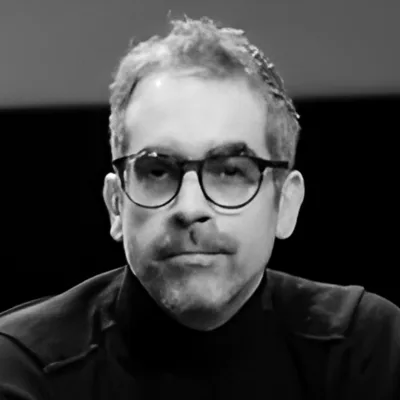
Vous travaillez directement avec Julien Pierre Martin, docteur en IA. Depuis 2000, il construit des outils à côté de ceux qui s'en servent, dans des métiers où une erreur coûte cher. Pour le travail qui vous reste à la main, aucune méthode toute faite n'existe. Nous l'écrivons avec vous.
Son parcours, métier par métier
Julien Pierre Martin construit des outils innovants depuis 2000, à côté de ceux qui s'en servent. Il a conçu des chaînes de fabrication dans l'animation 3D, puis dirigé la R&D d'un studio. Il a dirigé la R&D d'un traitement de texte pour juristes. Il a été responsable de l'innovation à l'ICIJ, le consortium des Panama Papers, où ses travaux ont été distingués par le jury du prix CNIL-Inria. D'un métier à l'autre, il a appris où chercher ce que les gens savent sans l'avoir jamais écrit. Il est docteur en IA (Sorbonne / Inria). Sa thèse, appliquée à la logistique d'entrepôt, permettait déjà à des ingénieurs d'écrire leur savoir-faire dans un logiciel.
Questions fréquentes
Nos procédures ne sont pas écrites. C'est bloquant ?
Non — c'est la situation normale, et c'est justement le travail. Si tout était écrit et appliqué à la lettre, il n'y aurait rien à reprendre.
Ce qu'il nous faut, ce n'est pas votre documentation : ce sont vos affaires passées — mémoires, chiffrages, retours d'expérience — et une demi-journée par semaine avec les deux ou trois personnes qui savent, y compris les semaines chargées. C'est, de loin, la condition qui échoue le plus souvent.
Un point pratique se vérifie en vingt minutes : où vivent ces dossiers. Un disque partagé, même mal rangé, suffit. Éparpillés dans des boîtes mail individuelles, non.
Au bout de combien de temps voit-on un retour ?
Un premier chiffre dès les vingt minutes : ce que ce travail vous coûte aujourd'hui, estimé avec vos chiffres.
À la fin des trois dossiers de référence, quatre à six semaines plus tard, vous avez trois chiffres mesurés sur vos archives et le plan du projet. Ils servent de base de comparaison.
Le retour du logiciel se mesure une fois qu'il est en place, contre ces chiffres, dans le suivi. Le logiciel est construit pour pouvoir s'étendre ensuite à un deuxième travail.
Si vous cochez les cinq cases
Vous parlez vingt minutes avec la personne qui ferait le travail. Vous repartez avec quatre réponses. Votre maison remplit-elle les conditions ? Par quel travail commencer ? Que vous coûte-t-il aujourd'hui, estimé avec vos chiffres ? Que demanderait-il à vos équipes ? S'il vous manque une condition, nous vous disons ce que nous ferions à votre place.
Vingt minutes, gratuites. Vous saurez si c'est faisable chez vous.
Où nous sommes, et si vous n'êtes pas prêt
Nous sommes à Verrières-le-Buisson, dans l'Essonne. Nous venons sur place à Paris et en Île-de-France, et nous travaillons à distance ailleurs. La seule présence que le projet demande vraiment est la demi-journée par semaine de ceux qui savent.
Vous voulez voir ce que ça donne sur un vrai dossier ? Lisez L'IA pour répondre à un appel d'offres : mémoire technique, DPGF, DC1 et DC2. Vous y verrez ce qu'elle rédige, où elle se trompe, et pourquoi.
Il vous manque une ou deux conditions ? Commencez par L'Ordre du jour, notre édition mensuelle pour les dirigeants, ou par un verdict public. Vous n'avez rien à payer ni à signer.